
Last Updated: May 18, 2026
Bakersfield ranks among the sunniest cities in California, which makes the case for going solar here almost self-evident. Yet choosing the right home solar installer is where most homeowners stumble, and the wrong decision can cost years of savings. This guide from Discount Solar covers everything Kern County homeowners need to know in 2026: costs, NEM 3.0 changes, permitting hurdles, battery storage, and how to evaluate installers before signing anything.
Here’s what most guides get wrong: they focus on panels and skip the installer vetting process entirely. Below, we’ll show you exactly how to compare quotes, ask the right questions, and avoid the mistakes that leave homeowners locked into underperforming systems.
Why Bakersfield Homeowners Need a Home Solar Installer Now
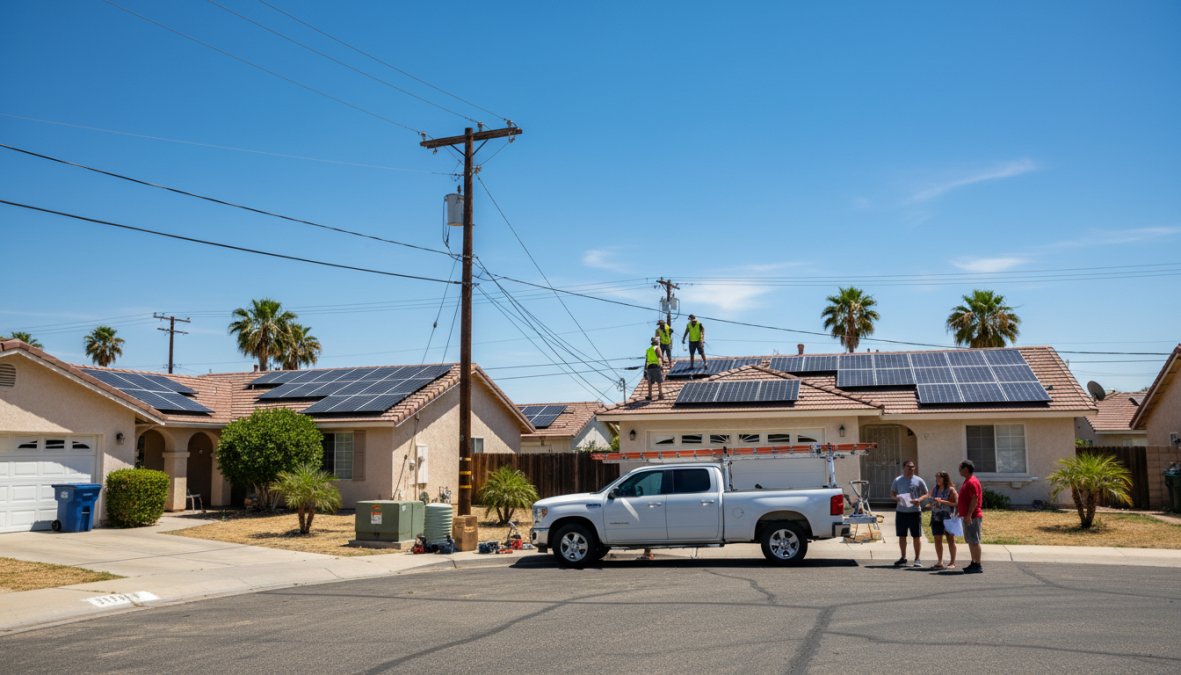
Bakersfield sits in the heart of the Central Valley, where summer temperatures regularly push past 110 degrees Fahrenheit. That heat is brutal on electricity bills. Air conditioning runs almost continuously from June through September, and Pacific Gas & Electric’s tiered rate structure means the more you use, the more you pay per kWh.
The timing argument for solar in Bakersfield is straightforward. Utility rates have climbed consistently over the past decade, and there is little reason to expect that trend to reverse. Homeowners who install solar panels now lock in their energy costs and insulate themselves from future rate hikes. Those who wait simply pay more each month with nothing to show for it.
Bakersfield Heat, High kWh Rates, and Rising Utility Costs
The math works in favor of solar here more than almost anywhere else in California. Bakersfield averages over 270 sunny days per year, which means solar production is high and consistent. A properly sized residential solar system can offset the majority of a household’s annual electricity consumption, dramatically reducing or eliminating monthly utility bills.
PG&E’s peak-rate hours typically fall between 4 PM and 9 PM, precisely when households return home and energy demand spikes. Without solar and battery storage, homeowners pay the highest possible rate during those hours. A solar-plus-storage setup shifts consumption away from those windows, generating real savings every single day.
Pro TipIf your current electricity bill spikes above $250 in summer months, you’re likely a strong candidate for solar. The higher your current bill, the faster your return on investment.
NEM 3.0 and What It Means for Kern County Homeowners
Net metering has changed, and this is the part most solar guides in 2026 still aren’t addressing honestly. California’s NEM 3.0 policy, which took effect for new applicants in April 2023, significantly reduced the export rate that utilities pay for excess solar energy sent back to the grid. Under the older NEM 2.0 rules, homeowners received near-retail credit for every kWh exported. Under NEM 3.0, those export rates are substantially lower.
The practical implication is direct: solar systems designed purely to export excess power are less financially attractive than they were two years ago. The new model rewards self-consumption. Homeowners who pair their solar panels with battery storage capture more of their own production, use it during peak-rate hours, and reduce their dependence on grid exports entirely.
According to California Public Utilities Commission guidance on NEM 3.0, the new tariff structure was designed to better reflect the actual value of distributed energy resources to the grid. For Kern County homeowners, this means battery storage has shifted from a luxury upgrade to a financially strategic component of any new solar installation.
Solar Panel Installation Costs in Bakersfield: What to Expect
Solar installation costs in Bakersfield vary based on system size, equipment brand, roof complexity, and whether battery storage is included. Getting a clear picture before requesting quotes helps homeowners evaluate proposals more accurately and avoid being oversold. This section goes further than most guides by breaking down the specific incentive stack available to Kern County homeowners in 2026, including the programs most sales pitches gloss over.
Price Per Watt and System Size
Residential solar systems in California are priced on a per-watt basis before incentives. The total cost depends on how many watts your home requires, which is calculated from your annual kWh consumption. A typical Bakersfield home with high summer cooling loads, running central air conditioning from June through September, often requires a larger system than the California average, because the cooling load drives consumption well above what a mild-climate household would need.
Roof complexity adds cost. A single-plane south-facing roof is the simplest and least expensive to work with. Multi-pitch roofs, roofs with significant shading from trees or chimneys, or homes that require a main electrical panel upgrade before interconnection will carry higher installation costs. Ask any installer to itemize these variables in their proposal so you can compare apples to apples across quotes.
Watch OutNever evaluate solar quotes on total system cost alone. A lower upfront price can hide inferior panel efficiency ratings, shorter inverter warranties, or excluded line items like electrical panel upgrades, all of which reduce long-term system performance and ROI.
The Federal Investment Tax Credit (ITC)
The federal solar Investment Tax Credit allows homeowners to deduct a significant percentage of their total solar installation cost, including battery storage, directly from their federal income tax liability. This is a dollar-for-dollar reduction in taxes owed, not a deduction from taxable income, which makes it substantially more valuable than a standard deduction.
According to U.S. Department of Energy solar incentives overview, the ITC applies to both the solar panel system and any battery storage installed at the same time or added to an existing solar system. Confirm with a qualified tax professional that your federal tax liability is sufficient to absorb the credit in the year of installation; if not, the unused portion can typically be carried forward.
Local Utility Rebate Programs: PG&E vs. Municipal Utilities in Kern County
This is where most solar guides in Bakersfield stop short, and it’s worth slowing down here because the incentive picture is more layered than the federal credit alone.
PG&E customers (most of Bakersfield and unincorporated Kern County):
PG&E does not currently offer a direct cash rebate for residential solar panel installation, but it does administer the Self-Generation Incentive Program (SGIP) on behalf of the California Public Utilities Commission. SGIP provides rebates specifically for battery storage systems, not solar panels, and is structured in tiers based on storage capacity. Rebate availability under SGIP fluctuates as funding is allocated and exhausted; checking current reservation status directly through California SGIP program portal before finalizing a purchase is essential. Equity and equity resiliency tiers within SGIP offer higher rebate levels for income-qualified households and those in high fire-threat districts, both of which apply to portions of Kern County.
California Climate Credit:
PG&E residential customers receive a California Climate Credit twice per year as a bill credit. While this is not a solar-specific incentive, it reduces the baseline bill against which solar savings are measured and is worth factoring into your payback calculation.
Municipal utility customers (Kern River Valley, some smaller communities):
A small number of Kern County communities are served by municipal utilities rather than PG&E. Municipal utilities are not bound by the CPUC’s NEM 3.0 tariff structure and set their own net metering rules, which in some cases remain more favorable than PG&E’s current export rates. If your property is served by a municipal utility, verify its specific net metering tariff before assuming NEM 3.0 applies, the financial model for your system may differ meaningfully from a PG&E-served neighbor.
Property Tax Exclusion:
California’s active solar energy system property tax exclusion means that a qualifying solar installation does not increase your home’s assessed value for property tax purposes. This exclusion has been extended multiple times by the state legislature. Confirm current status with the Kern County Assessor’s office, but as of 2026 this exclusion remains in effect and represents a meaningful avoided cost over the life of the system.
Pro TipStack your incentives in the right order: federal ITC first (applied to your total net cost), then SGIP battery rebate (if applicable), then confirm property tax exclusion with the county assessor. Each layer reduces your effective payback period.
Financing Options: What Each Structure Actually Means
Financing options for residential solar in Bakersfield typically include cash purchase, solar loans, and lease or power purchase agreement (PPA) structures. The choice of financing structure affects not just monthly payments but also who owns the system, who claims the federal tax credit, and what happens when you sell your home.
| Financing Structure | Who Owns the System | Who Claims the ITC | Long-Term ROI | Home Sale Consideration |
|---|---|---|---|---|
| Cash purchase | Homeowner | Homeowner | Highest | System adds to home value |
| Solar loan | Homeowner | Homeowner | High (interest reduces savings) | System transfers with home |
| Lease / PPA | Installer | Installer | Lower (no ITC benefit) | Lease must transfer to buyer |
Cash purchase delivers the highest long-term return because the homeowner captures the full federal tax credit and pays no interest. Solar loans allow homeowners to own their system and claim the ITC while spreading payments over time; the net savings depend on the loan’s interest rate relative to the electricity costs avoided. Lease and PPA structures require no upfront cost but transfer ownership and tax credit eligibility to the installer, and when you sell your home, the buyer must qualify to assume the lease, which can complicate real estate transactions.
Discount Solar offers flexible financing options designed to make the transition to solar accessible without requiring a large upfront payment. Ask for a side-by-side comparison of cash, loan, and lease scenarios using your actual projected production numbers so you can evaluate the true 25-year cost of each path.
How to Compare Solar Quotes and Choose the Right Home Solar Installer
Most homeowners request one or two quotes and pick the lower number. That’s the wrong approach. The solar installer you choose affects system performance, warranty coverage, permitting speed, and support quality for the next 25 years. Price matters, but it’s one variable among many.
Installer Comparison Table: Key Criteria to Evaluate
Use this table as a framework when comparing proposals from any home solar installer in the Bakersfield area.
| Criteria | What to Look For | Red Flag |
|---|---|---|
| Licensing | CSLB-licensed, C-10 or C-46 | No license number provided |
| Experience | 5+ years, local installations | Newly formed company |
| Equipment warranty | 25-year panel warranty | Less than 10 years |
| Workmanship warranty | 10+ years labor | No labor warranty offered |
| Price per watt | Competitive, itemized | Lump sum only, no breakdown |
| Battery storage option | Tesla Powerwall or equivalent | No storage option available |
| Permitting handled | Yes, full service | Homeowner must manage permits |
| Financing options | Multiple structures available | Cash only or single lender |
| Reviews | 4.5+ stars, 50+ reviews | Few reviews, no local references |
The comparison table above should guide your evaluation, but the deeper vetting happens in conversation. Request itemized proposals that specify panel brand, wattage, inverter model, and projected annual kWh production.
Questions to Ask Solar Installers Before You Sign
Knowing how to compare solar quotes is only half the equation. The questions you ask during the consultation reveal whether an installer is genuinely qualified or simply running a sales process.
Here are the questions that separate serious solar installers from the rest:
- Are you CSLB-licensed in California, and what is your license number? Verify this independently at the Contractors State License Board website.
- Who actually installs the system: your employees or subcontractors? Many large national companies subcontract installations, which affects accountability and warranty service.
- What panels and inverters are you proposing, and why? A qualified installer explains the tradeoffs, not just the brand name.
- What is the projected annual kWh production, and how was that calculated? Ask for the software tool used (PVWatts, Aurora, or similar).
- How does your proposal account for NEM 3.0 export rates? Any installer who doesn’t address this in 2026 is behind.
- What happens if my system underperforms the projection? Some installers offer production guarantees; others don’t.
- Who handles permitting with the city and utility interconnection? Full-service installers manage this end to end.
- What does your workmanship warranty cover, and for how long? Get this in writing.
- Can you provide references from Bakersfield or Kern County installations in the past two years?
- What is your timeline from signed contract to system activation?
Key TakeawayThe solar panel installation process from signed contract to utility interconnection typically takes 6 to 12 weeks in Kern County. Installers who promise dramatically faster timelines may be skipping permitting steps.
The Solar Panel Installation Process: Step by Step
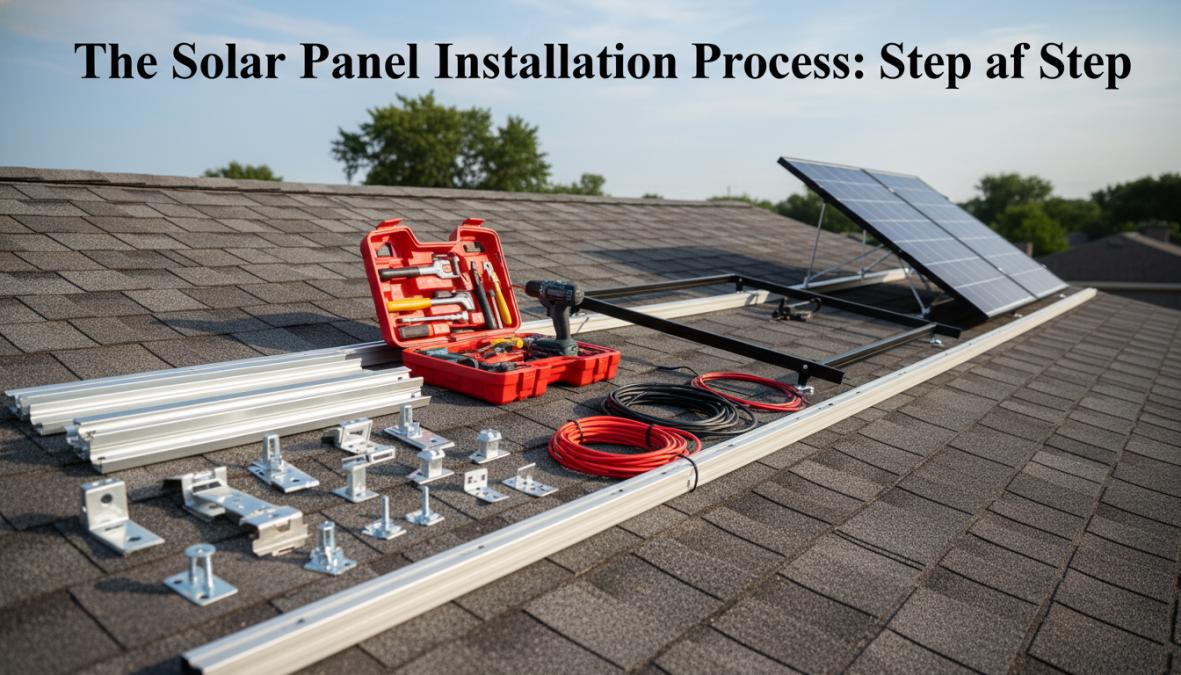
The solar panel installation process follows a consistent sequence in California, though timelines vary by installer efficiency and local permitting speed. Understanding the steps prevents surprises and helps homeowners hold installers accountable.
Step 1: Site Assessment and System Design
A certified installer visits the property to evaluate roof condition, orientation, shading, and electrical panel capacity. This produces a custom system design specifying panel count, layout, and inverter type. In Bakersfield, a competent site assessment also accounts for the roof’s ability to shed dust and debris, flat or low-pitch roof sections accumulate particulate matter faster than steeply pitched surfaces, which affects both cleaning frequency and long-term production estimates.
Step 2: Proposal and Contract
The installer presents a detailed proposal including equipment specifications, projected production, total cost, and warranty terms. Signed contracts should include all of this in writing. Projected annual kWh production should be calculated using recognized modeling software such as PVWatts or Aurora Solar, and the installer should be able to explain the assumptions used.
Step 3: HOA Approval and Permitting
This is the step that most guides treat as a single bullet point. In Kern County, it is often the most time-consuming and misunderstood phase of the entire process. See the detailed breakdown below.
Step 4: Equipment Procurement
Panels, inverters, racking hardware, and battery storage components are ordered and staged. Supply chain lead times vary by manufacturer and season; confirm expected delivery windows before signing a contract if your installation timeline is time-sensitive.
Step 5: Physical Installation
Certified installers mount the racking system, install panels, connect wiring, and integrate any battery storage. This typically takes one to two days for a standard residential system. Confirm in advance whether the crew performing the installation is employed directly by the company you contracted with or is a subcontracted team.
Step 6: Inspection and Utility Interconnection
The city or county inspects the installation. After passing inspection, the utility processes the interconnection agreement and installs a net meter. This step is where most delays occur, particularly during high-volume periods when PG&E’s interconnection queue is backlogged.
Step 7: System Activation
Once interconnection is approved, the system is activated and begins generating electricity.
Key TakeawayThe solar panel installation process from signed contract to utility interconnection typically takes 6 to 12 weeks in Kern County. Installers who promise dramatically faster timelines may be skipping permitting steps or underestimating interconnection queue times.
HOA and Permitting in Kern County: A Detailed Walkthrough
This is the section most solar guides skip entirely, and it’s the one that most often catches Bakersfield homeowners off guard. Kern County’s mix of HOA-governed communities, multiple permitting jurisdictions, and PG&E interconnection requirements creates a multi-track approval process that can stall an installation for weeks if not managed proactively.
Understanding Your HOA’s Authority, and Its Limits
California’s Solar Rights Act, codified in Civil Code Sections 714 and 714.1, prohibits HOAs from effectively prohibiting solar energy systems. As documented in California Solar Rights Act summary, an HOA restriction is unenforceable if it would increase the cost of a solar system by more than a specified threshold or decrease its efficiency beyond a defined limit. However, “prohibit” and “restrict” are different things. HOAs retain the legal right to:
- Require advance written approval before installation begins
- Specify that panels must not be visible from the street (in some cases)
- Require panels to be flush-mounted rather than tilted on a flat roof
- Mandate specific colors for conduit or junction boxes visible from common areas
- Require that the installer carry a minimum level of liability insurance
The practical consequence is that HOA approval is a real step with real timelines, not a formality. HOA boards typically meet monthly, and if your application misses a meeting cycle, you may wait four to six weeks for the next review. Submit your HOA application as early in the process as possible, ideally before or simultaneously with the city permit application, not after.
What to Include in Your HOA Solar Application
Most Kern County HOAs that have processed solar applications before will have a standard form. If yours does not, a complete application package typically includes:
- A site plan showing panel placement on the roof
- Manufacturer spec sheets for the panels and mounting hardware
- A statement confirming the installation will be performed by a CSLB-licensed contractor
- Confirmation that the installer carries general liability and workers’ compensation insurance
- A description of any roof penetrations and how they will be sealed and waterproofed
If your HOA denies an application that complies with the Solar Rights Act, the denial is likely unenforceable. The California Department of Consumer Affairs provides guidance on disputing HOA solar denials, and many installers with local experience have navigated this process before and can assist.
City of Bakersfield vs. Unincorporated Kern County Permitting
Where your property sits within Kern County determines which permitting authority you deal with, and the two have different processes and timelines.
City of Bakersfield: Residential solar permits are processed through the City’s Building Division. The City of Bakersfield participates in California’s SolarAPP+ automated permitting platform for straightforward residential solar installations that meet standard parameters. SolarAPP+ can issue permits in hours rather than days for qualifying systems, which meaningfully compresses the overall project timeline. Ask your installer whether your system qualifies for SolarAPP+ processing and whether they have used it for previous Bakersfield installations.
Unincorporated Kern County: Properties outside city limits are permitted through the Kern County Planning and Natural Resources Department. Unincorporated Kern County has its own permit application process and inspection scheduling system, which operates independently from the City of Bakersfield. Installers who primarily work within city limits may be less familiar with county-specific requirements, which can introduce delays. Confirm that your installer has recent experience with the specific jurisdiction your property falls under.
PG&E Interconnection: The Step That Controls Your Go-Live Date
After the city or county inspection is passed, the installer submits an interconnection application to PG&E. PG&E reviews the application, may require additional technical documentation for larger systems, and schedules a meter exchange or net meter installation. This process is entirely outside the installer’s or homeowner’s control once submitted.
PGE interconnection timelines have historically ranged from a few weeks to several months depending on application volume and whether PG&E requires any grid upgrades in your area. The interconnection application should be submitted to PG&E as promptly as possible after permit approval, delays in submission directly delay your system activation date.
A common mistake is assuming permitting is the installer’s problem alone. Stay in communication with your installer throughout this phase. Ask for confirmation when the interconnection application was submitted, and request the PG&E application reference number so you can follow up independently if needed.
Pro TipIf you live in an HOA community, ask your installer on the first call whether they have submitted HOA applications in your specific community before. An installer who has already navigated your HOA’s process knows the board’s preferences and typical turnaround time, which can save weeks.
Maintenance, Cleaning, and Long-Term System Performance
Bakersfield’s climate creates a maintenance challenge that most solar guides ignore entirely. The Central Valley’s agricultural activity, dust storms, and dry conditions deposit particulate matter on solar panels at a rate far higher than coastal California. Dirty panels produce less electricity. The reduction in output from accumulated dust and debris is real and measurable, and in a region where panels may go months without meaningful rainfall to rinse them naturally, proactive cleaning is not optional, it is part of owning a solar system here.
A practical maintenance schedule for Bakersfield solar systems:
- Monthly visual inspection: Check for visible debris, bird nesting activity, or new shading from tree growth
- Quarterly cleaning: Rinse panels with water in the early morning before temperatures rise; avoid cleaning during peak afternoon heat, which can thermally shock hot glass
- Annual professional inspection: Check wiring connections, mounting hardware torque, inverter performance data, and battery state of health
- After dust storms: Inspect and clean panels within 48 hours of significant dust events, which are common in the Central Valley during dry, windy periods
Bird nesting under panels is a specific issue in Kern County that most guides from coastal markets never mention. Birds find the gap between panels and the roof an attractive nesting site, and nests can block airflow, trap moisture against the roof surface, and cause wiring damage. Critter guard, a mesh barrier installed around the perimeter of the panel array, is a low-cost addition at installation time that prevents this problem entirely. Ask your installer whether critter guard is included or available as an add-on.
Most modern inverters provide real-time production monitoring through a smartphone app. Monitoring your daily kWh output against the installer’s projected production baseline is the fastest way to detect performance degradation before it compounds into a significant loss. A sudden unexplained drop in production on a clear day is almost always worth investigating, common causes include a single panel covered by debris, a microinverter fault, or a shading issue from new growth.
Battery Storage and Outage Protection for Bakersfield Homes
Battery storage has become the most strategically important upgrade in any Bakersfield solar system, and NEM 3.0 is a large part of the reason. Under the current net metering structure, storing your own solar production and using it during peak-rate hours delivers significantly more financial value than exporting it to the grid.
The Tesla Powerwall remains one of the most recognized residential battery storage products on the market, offering whole-home backup capability and seamless integration with solar systems. Other reputable battery options include the Enphase IQ Battery and the SolarEdge Energy Bank. The right choice depends on your home’s energy consumption profile, backup power priorities, and budget.
Outage protection is the other compelling argument for battery storage in Kern County. PG&E’s Public Safety Power Shutoff (PSPS) program has resulted in planned outages across Kern County during high fire-risk weather events. A solar-plus-battery system keeps critical loads running during outages, including refrigeration, lighting, medical equipment, and communication devices.
According to U.S. Energy Information Administration residential battery storage overview, residential battery storage adoption has accelerated significantly in California as homeowners seek both bill savings and grid independence. The combination of NEM 3.0 economics and outage risk makes battery storage a sound investment for most Bakersfield homeowners installing solar in 2026.
Why Discount Solar Is a Trusted Home Solar Installer in Kern County
The home solar installer market in Bakersfield includes national chains, regional companies, and local specialists. The differences matter more than most buyers realize.
Discount Solar has operated in Kern County for a decade, which means local permitting experience, established relationships with utility interconnection teams, and a track record of completed installations that homeowners can verify. A decade of local installations is not a marketing claim; it’s accountability.
The specifics that distinguish Discount Solar from the alternatives:
- 25-year equipment warranty on solar panels, which is among the strongest coverage available in the residential solar market
- Certified installers who handle every installation directly, not subcontractors
- Custom system design tailored to each home’s roof configuration, consumption pattern, and budget
- Flexible financing that makes residential solar accessible without requiring a large cash outlay
- Affordable pricing backed by transparent, itemized proposals
The 25-year warranty deserves particular attention. Solar panels degrade slowly over time, and warranty coverage that matches the productive life of the system protects homeowners from equipment replacement costs during the period when the system is still paying off its installation cost.
Get your estimate from Discount Solar and see what a locally trusted home solar installer can deliver for your specific home and energy goals.
Choosing a home solar installer in Bakersfield is a 25-year decision, and the stakes are higher in 2026 than they’ve ever been given NEM 3.0’s impact on export economics and the growing importance of battery storage. Discount Solar brings a decade of local Kern County experience, a 25-year equipment warranty, and certified installers who handle every project from permitting through activation. Get your estimate from Discount Solar and start generating your own electricity instead of paying for someone else’s.
Frequently Asked Questions
How do I find a reputable home solar installer near me in Bakersfield?
Start by checking that any home solar installer you consider is licensed by the California Contractors State License Board (CSLB) and holds a C-10 or C-46 license. Read verified reviews on Google and the BBB, ask for local references, and confirm they handle permits in Kern County. A reputable installer will offer a written installation warranty and a clear performance guarantee before you sign anything.
What questions should I ask solar installers before getting a quote?
Key questions to ask solar installers include: Are you CSLB-licensed and NABCEP-certified? Do you handle HOA approval and city permitting? What equipment brands do you install, and what is the warranty length? How do you calculate my estimated solar production and ROI? Will my system qualify for the federal tax credit? What happens if my panels underperform? Getting clear answers upfront helps you compare solar quotes accurately and avoid surprises.
How does NEM 3.0 affect solar savings for Bakersfield homeowners?
Under NEM 3.0, California utilities including PG&E significantly reduced the export rate paid for excess solar energy sent back to the grid, by roughly 75% compared to NEM 2.0. For Bakersfield homeowners, this means pairing solar panels with battery storage like a Tesla Powerwall is now more financially important than ever. Storing energy during peak production and using it during peak-rate hours maximizes your electricity bill savings under the new net metering rules.
What is the average cost of solar panel installation in Bakersfield, CA?
Residential solar installation in Bakersfield typically ranges from $2.50 to $3.50 per watt before incentives, meaning a common 6-8 kW system may cost $15,000-$28,000 before the 30% federal tax credit. After the tax credit, many homeowners bring that figure down considerably. Exact pricing depends on system size, roof complexity, equipment quality, and the solar installer you choose. Always get at least three solar quotes to compare price per watt and warranty terms.
Does the solar installer handle permits and HOA paperwork in Kern County?
A full-service home solar installer should manage the entire permitting process, including submitting plans to the City of Bakersfield or Kern County building department and coordinating utility interconnection with PG&E. For homes in HOA communities, a good installer will also prepare the documentation needed for HOA approval, which California law (Civil Code Section 714) generally requires HOAs to approve within 45 days. Always confirm permit handling is included before signing your contract.
How long does the solar panel installation process take from quote to power-on?
The full solar panel installation process in Bakersfield typically takes four to twelve weeks from signed contract to system activation. The physical roof installation usually takes one to three days. The longer timeline accounts for permit approvals, HOA review if applicable, utility interconnection approval from PG&E, and final inspection. Your certified installer should provide a project timeline upfront so you know what to expect at each stage.


