
Last Updated: May 23, 2026
Choosing the right solar energy products and services is one of the most consequential home improvement decisions you’ll make in 2026, and getting it wrong costs real money. At Discount Solar, we’ve spent over a decade helping homeowners in Bakersfield and Kern County cut through the noise and build systems that actually deliver on their promises. Below, we’ll show you exactly how to evaluate every component of a residential solar system, from panel technology to battery storage to financing, so you can move forward with confidence rather than guesswork.
Here’s what most guides get wrong: they treat solar as a single product purchase. It isn’t. A complete PV system is a stack of interdependent components, and optimizing one while ignoring another leaves significant performance on the table. The five areas we cover in this guide, including system types, panel technology, inverter selection, installation costs, and maintenance, work together as a system. Miss one and you’ve missed the point.
What Solar Energy Products and Services Actually Cover
Solar energy products and services span a much broader category than most homeowners realize. The term covers everything from the photovoltaic panels on your roof to the inverter converting DC power to usable AC electricity, the battery storage holding overnight reserves, the charge controllers regulating current flow, and the professional installation and monitoring services that tie it all together.
Think of it this way: the panel captures sunlight, the inverter converts it, the battery stores it, and the monitoring platform tells you how well the whole system is performing. Remove any one of those layers and the system underperforms or fails entirely.
Grid-Tie, Hybrid, and Off-Grid Solar Systems at a Glance
The three dominant system architectures each solve a different problem:
- Grid-tie solar connects directly to the utility grid with no battery storage. Excess energy feeds back to the grid through net metering, earning credits on your electricity bill. This is the most cost-effective setup for homeowners with reliable grid access.
- Hybrid solar pairs grid connection with battery storage. You stay connected to the grid as a backup while storing solar energy for evening use or outages. This is the fastest-growing residential configuration in 2026.
- Off-grid solar operates entirely independently. Requires larger battery banks and careful system design to cover full household load, but delivers complete energy independence in remote locations.
For most Kern County homeowners, a hybrid system hits the sweet spot between upfront cost and energy resilience. Grid-tie remains the entry-level choice for budget-conscious buyers. Off-grid makes sense for rural properties where grid connection costs are prohibitive.
Key TakeawayThe system architecture you choose determines your long-term savings ceiling. Grid-tie maximizes net metering credits. Hybrid maximizes self-consumption and backup protection. Off-grid maximizes independence but requires the largest upfront investment.
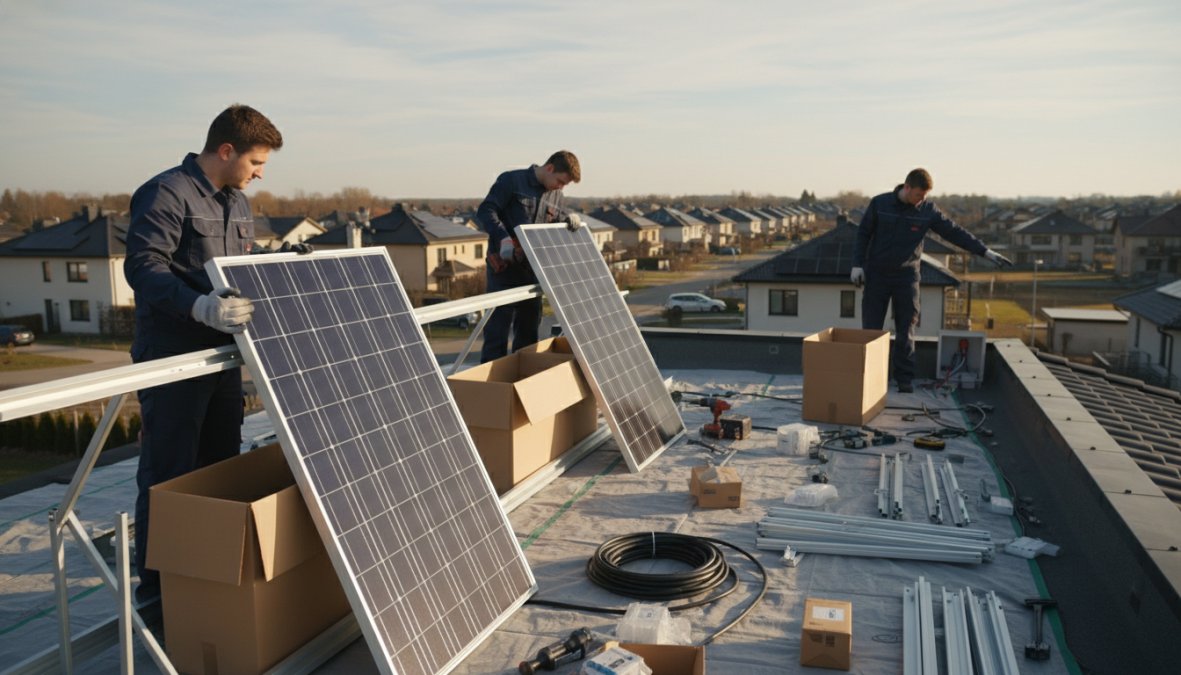
Types of Solar Energy Systems: Which Setup Fits Your Home?
Picking the wrong system type is the single most expensive mistake residential buyers make. The right choice depends on your utility rate structure, roof orientation, shading profile, and how much grid independence you actually need.
A useful starting point is your last 12 months of electricity bills. Calculate your average monthly kilowatt-hour consumption. That number, combined with your roof’s peak sun hours (Bakersfield averages among the highest in California), determines the system size in watts you need to offset your usage.
Monocrystalline vs. Polycrystalline vs. Thin-Film Solar Panels
Panel technology is where many buyers get lost in spec sheets. Here’s the practical breakdown:
Monocrystalline panels are cut from a single silicon crystal, giving them the highest efficiency ratings on the market. Maxeon Solar Panels (formerly SunPower) push efficiency up to 22.8% with their Maxeon 6 line, backed by an industry-leading 40-year warranty and an annual degradation rate of just 0.25%. For homeowners with limited roof space who need maximum output per square foot, monocrystalline is the clear choice. The trade-off is cost.
Polycrystalline panels use multiple silicon fragments fused together. Efficiency typically runs lower than monocrystalline, but so does the price. For homeowners with ample roof space and a tighter budget, polycrystalline panels offer solid long-term value.
Thin-film panels use semiconductor materials deposited on glass or metal. They perform better in diffuse light and high heat conditions, which matters in Kern County summers. Efficiency lags behind crystalline silicon, but thin-film has a lower manufacturing footprint and handles shading more gracefully.
| Panel Type | Typical Efficiency | Best For | Relative Cost |
|---|---|---|---|
| Monocrystalline | 20-23% | Limited roof space, max output | Higher |
| Polycrystalline | 15-18% | Ample roof, budget-conscious | Moderate |
| Thin-film | 10-13% | High heat, partial shade | Lower |
Inverters, Charge Controllers, and Battery Storage Options
Inverters handle power conversion from DC (what panels produce) to AC (what your home uses). Three main types dominate the residential market:
String inverters connect all panels in a series. They’re cost-effective but suffer from a “weakest link” problem: shade on one panel reduces output for the entire string.
Microinverters, like the Enphase IQ series, convert power at the individual panel level. This means partial shading on one panel doesn’t drag down the others. Enphase IQ Microinverters also include rapid shutdown capability for safety compliance and integrate with Enphase IQ Batteries for storage. The SolarEdge Home Hub Inverter takes a different approach: it uses panel-level optimizers with a central inverter, combining the monitoring granularity of microinverters with the cost efficiency of a string architecture. It also includes EV readiness, which matters as more homeowners add EV chargers to their systems.
For battery storage, lithium batteries have largely replaced lead-acid in residential applications. The Tesla Powerwall remains the most recognized option, offering whole-home backup capability, customizable power modes, and solar recharging. Charge controllers regulate the current flowing from panels to batteries, preventing overcharge. In off-grid and hybrid systems, this component is non-negotiable.
Pro TipFor roofs with any shading from trees, chimneys, or neighboring structures, microinverters or power optimizers will outperform a standard string inverter over the life of the system. The higher upfront cost typically pays back within three to five years through improved energy harvest.
Key Solar Energy Benefits Beyond Cutting Electricity Bills
The obvious solar energy benefit is a lower monthly electricity bill. But the financial case runs deeper than most homeowners initially realize.
Energy rate protection is underappreciated. Utility rates in California have trended upward consistently over the past decade. A solar array locks in a significant portion of your energy cost at installation, insulating you from future rate increases. The longer you hold the system, the more that protection compounds.
Energy resilience is the benefit that resonates most after a grid outage. Homes with battery storage maintain power for essential appliances, refrigeration, and medical equipment during outages that leave grid-only neighbors dark. This isn’t a hypothetical in Kern County, where summer heat events stress the grid.
Property value is another concrete benefit. According to U.S. Department of Energy research on solar home values, homes with solar systems sell at a premium compared to comparable non-solar properties. The premium varies by market, but in California’s high-rate environment, buyers recognize the value of reduced operating costs.
Environmental impact extends beyond carbon emissions. Solar adoption reduces demand on fossil-fuel peaker plants, which run during peak summer hours and produce disproportionate emissions. At the system level, modern panels have energy payback periods of two to four years, meaning they generate more clean energy than was used in their manufacture within that window. Panel recycling infrastructure is also maturing, with manufacturers increasingly offering end-of-life take-back programs.
Smart home energy integration adds another layer. Systems paired with energy monitoring platforms let homeowners track production and consumption in real time, identify inefficiencies, and automate loads like EV chargers and water heaters to run during peak solar production hours.

Solar Panel Installation Cost: What to Expect in 2026
Solar panel installation cost in 2026 varies based on system size, panel technology, inverter type, battery storage, and local permitting complexity. There is no universal number, and any company quoting you a price before assessing your roof, electrical panel, and energy usage is guessing.
That said, residential systems in California generally fall within a range that makes the investment viable for most homeowners, particularly given the state’s high electricity rates. Larger systems cost more upfront but produce a better cost-per-watt installed and faster payback. Adding battery storage increases the initial outlay but improves the economics in high time-of-use rate environments.
Tax Credits, Net Metering, and Solar Financing Options
Three financial mechanisms make solar viable for a much wider range of homeowners than the sticker price suggests:
Federal Investment Tax Credit (ITC): The federal solar tax credit allows homeowners to deduct a significant percentage of their system cost from federal taxes owed. This applies to panels, inverters, battery storage, and installation labor. According to IRS guidance on the Residential Clean Energy Credit, the credit applies to systems installed through at least 2032 at current rates. Consult a tax professional to confirm your eligibility.
Net metering: California’s net metering program allows grid-tie and hybrid system owners to send excess solar electricity back to the grid in exchange for bill credits. The current NEM 3.0 framework in California has changed how those credits are calculated compared to earlier versions, making battery storage more financially attractive than before. Understanding your utility’s specific rate schedule is essential before sizing a system.
Solar financing: Many homeowners choose solar loans or lease agreements to go solar with little or no money down. Discount Solar offers flexible financing options designed to make the transition affordable, with monthly payments that are often lower than the electricity bill savings from day one. Cash purchase delivers the highest long-term return, but financing removes the upfront barrier for homeowners who prefer to preserve liquidity.
Watch OutUnder California’s NEM 3.0 rules, the value of grid exports has changed significantly from NEM 2.0. Homeowners who sized their system under older assumptions may be disappointed by export credit values. Always model your system economics under current rate schedules, not older guides.
How to Choose the Right Solar Energy Products and Services
The most common mistake homeowners make is starting with a product and working backward to a use case. The right approach is the reverse: start with your energy profile, then select components that match it.
Step-by-Step: From System Design to Final Installation
Step 1: Audit your energy consumption. Pull 12 months of utility bills. Calculate average monthly kilowatt-hour usage and identify seasonal peaks. This is the foundation of accurate system sizing.
Step 2: Assess your roof. Roof orientation, tilt angle, shading obstructions, and remaining roof life all affect system design. South-facing roofs with minimal shade and a 30-degree pitch are ideal in the northern hemisphere. West-facing roofs perform better under NEM 3.0 because they produce more power during the high-value afternoon peak hours.
Step 3: Choose your system architecture. Grid-tie for maximum simplicity and net metering value. Hybrid if backup power or self-consumption optimization matters. Off-grid for remote locations.
Step 4: Select panel technology. Monocrystalline for limited space and maximum output. Polycrystalline for budget-conscious buyers with ample roof area. Thin-film where heat tolerance and partial shading are concerns.
Step 5: Choose your inverter type. String inverter for unshaded roofs on a budget. Microinverters or optimizers for complex or shaded roofs. All-in-one solutions like the SolarEdge Home Hub for homeowners who want integrated energy management and EV readiness.
Step 6: Decide on battery storage. Evaluate your utility’s time-of-use rates and outage risk. In California’s NEM 3.0 environment, battery storage has a clearer financial case than it did under NEM 2.0.
Step 7: Get multiple quotes, then evaluate installers. Price matters, but installer certification, warranty terms, and post-installation support matter more over a 25-year system life. Discount Solar’s certified installers carry a 25-year equipment warranty and a decade of installation experience in Kern County, which means they understand local permitting, utility interconnection requirements, and climate-specific design considerations.
According to Solar Energy Industries Association installer guidance, selecting a certified installer with verifiable local experience is one of the strongest predictors of long-term system performance.
Solar Panel Maintenance: Keeping Your PV System at Peak Performance
Solar panel maintenance is simpler than most homeowners expect, but neglecting it costs real kilowatt-hours over time.
The most impactful maintenance task is cleaning. Dust, pollen, and bird droppings reduce panel output by blocking sunlight. In Kern County’s dry, dusty climate, panels can accumulate enough soiling to noticeably reduce output between rainfall events. A gentle rinse with a garden hose in the early morning (when panels are cool) handles most cases. Avoid high-pressure washing, which can damage panel surfaces and void warranties.
Energy monitoring is your early warning system. Modern systems from Enphase, SolarEdge, and others provide panel-level or string-level production data through a smartphone app. A sudden drop in output from one panel or string often indicates a fault, loose connection, or inverter issue before it becomes a larger problem. Check your monitoring dashboard monthly at minimum.
Annual professional inspection covers what monitoring misses: wiring integrity, mounting hardware torque, inverter performance, and roof penetration sealing. Most installers offer maintenance agreements that include annual inspections.
Battery storage systems require periodic firmware updates and occasional capacity checks. Lithium battery systems like the Tesla Powerwall are largely self-managing, but confirming that the battery management system is running current firmware ensures you’re getting optimal charge/discharge behavior.
What most guides miss: inverter replacement is the most likely mid-life maintenance cost for a 25-year system. String inverters typically carry 10-12 year warranties and may need replacement once during the system’s life. Microinverters generally carry 25-year warranties that match the panels, eliminating this cost.
Common Mistakes Homeowners Make When Going Solar (And How to Avoid Them)
The numbers tell a clear story: homeowners who do their homework before signing a contract are significantly more satisfied with their systems than those who move quickly on the first quote they receive.
Undersizing the system. Sizing a system to current consumption ignores predictable future loads like EV chargers and heat pumps. A system that perfectly covers today’s usage will be undersized within three years for many households. Build in a 15-20% buffer if you anticipate adding an EV or upgrading to electric appliances.
Ignoring the electrical panel. Older homes with 100-amp service panels often need an upgrade to support a solar system plus battery storage. This adds cost that some quotes omit. Ask every installer whether your panel needs upgrading and get that cost included in the proposal.
Choosing on price alone. The cheapest quote often reflects cheaper components, thinner margins on installation quality, or a company that won’t be around in five years to honor warranty claims. A 25-year equipment warranty is only valuable if the installer is still operating. Discount Solar’s decade of local experience and long-term warranty commitment are concrete differentiators in a market where fly-by-night installers appear and disappear.
Misunderstanding net metering credits. California’s NEM 3.0 changed the credit structure for grid exports. Homeowners who modeled their payback period under NEM 2.0 assumptions will see different results. Always ask your installer to model system economics under current NEM 3.0 export rates for your specific utility.
Skipping battery storage because of upfront cost. Under NEM 3.0, the financial case for battery storage is stronger than it was under previous frameworks. Running the numbers both ways, with and without storage, before making the decision is essential. Many homeowners who skipped storage under NEM 2.0 are now retrofitting batteries at higher cost.
For a deeper look at California’s current net metering rules, the California Public Utilities Commission NEM 3.0 overview is the authoritative source.
Pro TipRequest a 25-year production estimate from every installer you quote, modeled against your actual utility rate schedule. This single document makes it possible to compare proposals on total value rather than just upfront price, and it forces installers to show their assumptions.
Conclusion: Start Your Path to Energy Independence Today
Going solar in 2026 involves more decisions than most homeowners anticipate, and the stakes are high enough that getting those decisions right matters over a 25-year horizon. Discount Solar brings a decade of certified installation experience in Bakersfield and Kern County, custom system design tailored to your specific roof and energy profile, and a 25-year equipment warranty that backs every installation. Get your estimate from Discount Solar and see exactly what clean, affordable solar energy looks like for your home.
Frequently Asked Questions
What are the main types of solar energy products available for homeowners?
The core solar energy products for residential use include solar panels (monocrystalline, polycrystalline, or thin-film), string inverters or microinverters for power conversion, charge controllers, and battery storage solutions like lithium batteries. You can also add EV chargers, energy monitoring systems, and portable power stations. Each component plays a role in a complete PV system, and the right combination depends on your energy goals, roof layout, and budget.
How much does solar panel installation cost for a typical home?
Solar panel installation cost varies based on system size, panel technology, and local labor rates. A residential solar installation in California typically ranges from roughly $15,000 to $30,000 before incentives. Federal tax credits can reduce that cost by 30%, and California-specific incentives may lower it further. Flexible solar financing options, including loans and lease arrangements, can also reduce or eliminate the upfront payment, making the transition more accessible for most homeowners.
What maintenance do solar panels require to stay efficient?
Solar panel maintenance is minimal but important. Panels should be cleaned two to four times per year to remove dust, bird droppings, and debris that reduce energy output. Inspect mounting hardware and wiring annually for signs of wear. Use your energy monitoring system to track kilowatt-hour production and flag unexpected drops. Inverters and battery storage units may need professional inspection every few years. Most quality solar installations come with long equipment warranties that cover major component failures.
What are the biggest benefits of investing in solar energy products and services?
The top solar energy benefits include significantly lower electricity bills, protection against rising energy rates, and access to net metering credits for excess power sent to the grid. Homeowners also gain energy resilience through battery storage for home backup during outages. Beyond finances, clean energy production reduces your household carbon footprint. In Bakersfield and Kern County, where sunlight is abundant, a well-designed solar array can generate enough power to cover most or all of a home’s annual electricity consumption.
How do I choose the right solar energy products and services for my needs?
Start by auditing your monthly electricity usage in kilowatt-hours and assessing your roof’s size, orientation, and shading. Then compare system types: grid-tie solar suits most homeowners, while hybrid solar adds battery storage for outage protection, and off-grid solar works for remote properties. Evaluate panel efficiency, inverter type (microinverters vs. string), and warranty terms. Work with certified installers who offer custom system design, transparent pricing, and strong post-installation support to ensure long-term performance and savings.


