
Last Updated: May 20, 2026
Electricity bills in Bakersfield rank among the highest in California’s Central Valley, and if you’ve opened a summer statement and felt your stomach drop, you’re not alone. The average electricity bill Bakersfield, CA, homeowners face reflects a brutal combination of extreme desert heat, tiered utility rates, and aging home infrastructure. This guide from Discount Solar breaks down exactly what you’re paying, why the number keeps climbing, and what you can realistically do about it. Below, we’ll show you exactly how to audit your usage, understand time-of-use pricing, access assistance programs, and evaluate whether solar makes financial sense for your household.
Most guides stop at the national comparison and call it a day. That’s the part most guides get wrong: knowing you pay more than average doesn’t help you pay less. The real value is understanding the specific mechanisms driving your bill in Kern County, so you can target them directly.
What Is the Average Electricity Bill in Bakersfield, CA?
The average electricity bill in Bakersfield CA sits noticeably higher than both the California state average and the national average, driven primarily by summer cooling demand and PG&E’s tiered rate structure. Residential electricity costs in Bakersfield vary considerably by household size, square footage, and energy habits, but most households land somewhere between moderately high and eye-watering during peak summer months.
Average Monthly Cost by Household Size and Square Footage
Electricity consumption scales closely with square footage and occupant count. The table below reflects general estimates based on typical residential energy consumption patterns in the Bakersfield climate zone. These are qualified estimates, not utility-published figures, but they align with patterns reported by Kern County homeowners.
| Household Size | Approx. Square Footage | Estimated Monthly kWh | Estimated Monthly Bill |
|---|---|---|---|
| 1-2 people | Under 1,000 sq ft | 600-900 kWh | Low-moderate range |
| 2-3 people | 1,000-1,800 sq ft | 900-1,400 kWh | Moderate-high range |
| 3-4 people | 1,800-2,500 sq ft | 1,400-2,000 kWh | High range |
| 4+ people | 2,500+ sq ft | 2,000+ kWh | Very high range |
Summer months push these figures significantly higher. A household that uses 1,200 kWh in February can easily consume 2,200 kWh in July when air conditioning runs continuously. That’s not an anomaly; it’s the Bakersfield norm.
How Bakersfield Compares to the National Average
According to U.S. Energy Information Administration residential electricity data, the national average residential electricity rate and consumption figures show Californians paying substantially more per kilowatt-hour than most states. Bakersfield compounds this further because of its climate. The national average household uses roughly 900 kWh per month. Bakersfield households routinely exceed that during summer cooling season, often by a wide margin.
The cost-of-living impact is real. Electricity costs represent a meaningful share of monthly household budget expenses for Bakersfield families, particularly those in larger homes without energy efficiency upgrades.
Why Is the Average Electricity Bill in Bakersfield So High?
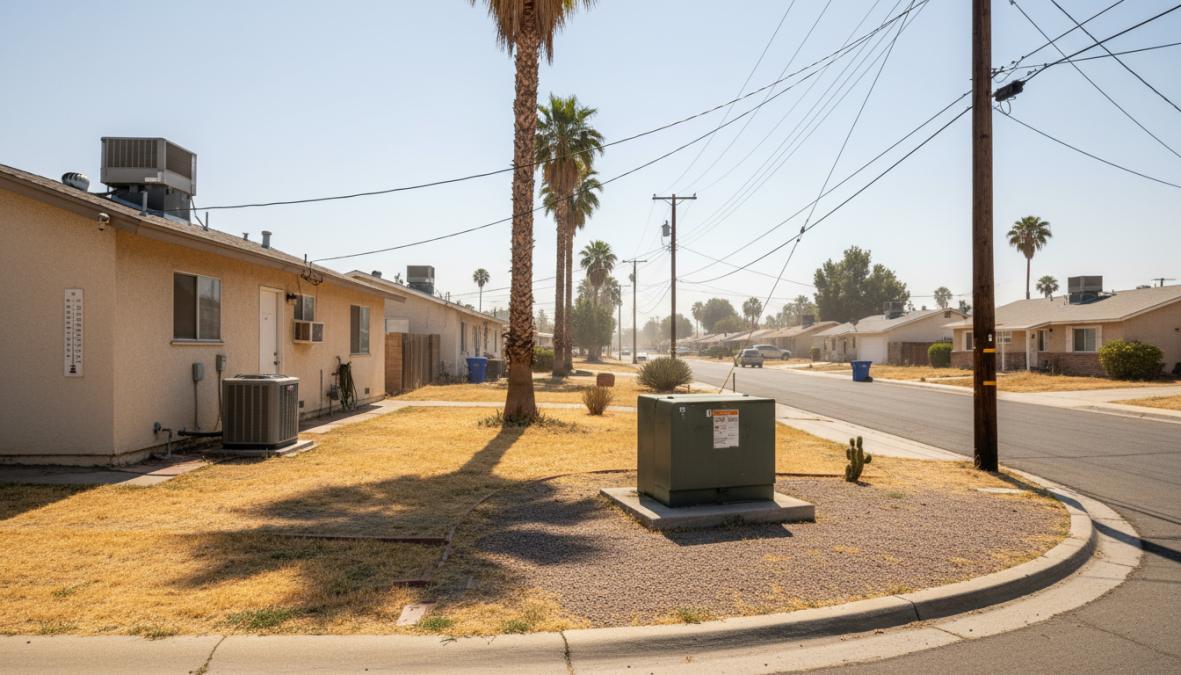
The honest answer is that Bakersfield draws the short straw on multiple fronts simultaneously. High ambient temperatures force HVAC systems to work harder and longer, PG&E’s rate structure penalizes heavy users through tiered pricing, and many residential homes in Kern County were built before modern energy efficiency standards.
Extreme Heat and Peak Summer HVAC Usage
Bakersfield regularly records summer temperatures above 100°F, sometimes sustaining that heat for weeks at a stretch. HVAC usage is the dominant driver of residential electricity consumption in this climate, accounting for a majority of summer kilowatt-hour consumption in most homes. The problem isn’t just that air conditioning runs; it’s that it runs at maximum capacity during the hottest part of the day, which is precisely when utility rates are highest under time-of-use pricing.
An older HVAC system with a low SEER rating works significantly harder than a modern unit to achieve the same cooling output. That efficiency gap translates directly into higher kWh consumption and a larger utility bill. In Bakersfield’s summer conditions, even a modest improvement in HVAC efficiency produces measurable savings.
Pro TipHave your HVAC system serviced before June. A dirty condenser coil or low refrigerant charge can increase energy consumption by a meaningful percentage without any visible performance difference until the system fails entirely.
PG&E Rate Structure and Variable Rates in Kern County
PG&E’s residential rate structure uses tiered pricing, meaning the more electricity you consume, the higher the rate you pay per kilowatt-hour for the additional usage. This design hits Bakersfield households hard because summer cooling demand pushes consumption into higher tiers almost automatically. A household that stays in the lower baseline tier during winter can find itself paying significantly more per kWh for the same appliances running in July.
Variable rates also change periodically through rate cases approved by the California Public Utilities Commission. According to California Public Utilities Commission rate information, PG&E customers have seen rate adjustments over recent years that affect both the baseline allocation and the higher tier pricing. Understanding which tier your household typically falls into is the first step toward managing costs.
Understanding Time-of-Use Rates in Bakersfield
Time-of-Use (TOU) rates are a pricing structure where the cost per kilowatt-hour varies depending on the time of day electricity is consumed. PG&E offers TOU rate plans that charge more during peak demand periods and less during off-peak hours, giving households a direct financial incentive to shift energy-intensive activities.
How TOU Rate Periods Work and When to Shift Usage
Under typical TOU plans, peak hours fall in the late afternoon through early evening, roughly 4 PM to 9 PM on weekdays. This is exactly when Bakersfield residents arrive home, crank the air conditioning, run the dishwasher, and cook dinner. The collision of peak pricing with peak household activity is what makes TOU rates a significant factor in the average electricity bill Bakersfield CA residents pay.
Off-peak periods, generally overnight and early morning, carry lower rates. Pre-cooling your home before 4 PM, running the dishwasher after 9 PM, and charging electric vehicles overnight are practical ways to shift consumption toward cheaper rate windows.
Here’s a straightforward TOU management checklist:
- Set your thermostat to pre-cool the home to 76-78°F before 4 PM
- Program your dishwasher to run after 9 PM
- Schedule laundry for morning hours or after 9 PM
- Set EV charging to begin after 9 PM
- Use smart plugs to automate high-draw appliances to off-peak windows
- Review your PG&E bill for TOU period breakdowns monthly
The thing nobody tells you about TOU plans is that they can actually lower your bill compared to tiered pricing, but only if you’re willing to change your habits. Households that adopt TOU plans without shifting any behavior often end up paying more.
How to Lower Your Electricity Bill in Bakersfield
Most energy-saving guides hand you a list of generic tips. Turn off lights, unplug chargers, buy LED bulbs. That advice isn’t wrong, but it misses where the real consumption is happening in a Bakersfield home.
Appliance-Specific Energy Audit: Where the kWh Go
The real difference between a $200 summer bill and a $400 one almost always comes down to a handful of high-draw appliances. Understanding which devices consume the most energy is more valuable than any general tip list.
Typical residential energy consumption by category in a hot climate:
| Appliance Category | Share of Summer Consumption | Priority for Audit |
|---|---|---|
| HVAC (cooling) | Largest share | Critical |
| Water heater | Significant share | High |
| Refrigerator | Moderate share | Medium |
| Washer/dryer | Moderate share | Medium |
| Lighting | Smaller share | Low |
| Electronics/standby | Small share | Low |
A common mistake is spending energy and money on lighting upgrades while ignoring the water heater. Switching to LED bulbs is worthwhile, but it will not move your bill the way addressing HVAC efficiency or water heater settings will.
Energy Efficiency Upgrades That Deliver Real Savings
Practical upgrades that produce measurable reductions in Bakersfield electricity consumption:
Attic insulation and air sealing: Bakersfield homes lose significant cooling through poorly insulated attics. Addressing this reduces the load on the HVAC system, which cuts both energy use and wear on the equipment.
Smart thermostat installation: A programmable or smart thermostat that adjusts setpoints automatically around TOU rate periods pays for itself relatively quickly in a climate with Bakersfield’s cooling season length.
Water heater temperature reduction and insulation: Setting your water heater to 120°F instead of 140°F reduces standby losses without any sacrifice in practical performance.
Window coverings and solar screens: Blocking direct sun on west-facing windows during afternoon hours reduces heat gain and lowers the cooling load during peak rate periods.
According to ENERGY STAR home improvement guidance, combining insulation improvements with HVAC efficiency upgrades produces the largest reductions in residential energy consumption in hot climates.
California Electricity Bill Assistance Programs
Knowing that your bill is high is one thing. Having resources to manage it is another. Several assistance programs exist specifically for California residents facing high utility costs, and many Bakersfield households qualify without realizing it.
CARE (California Alternate Rates for Energy): The CARE program provides a discount on monthly PG&E bills for income-qualified households. Eligibility is based on household income and size. Enrolled households receive a percentage reduction on their electricity and natural gas bills.
FERA (Family Electric Rate Assistance): FERA targets households that don’t qualify for CARE but still face financial hardship. It provides a smaller discount specifically on electricity bills for households with three or more people.
REACH (Relief for Energy Assistance through Community Help): REACH is a one-time emergency assistance program for PG&E customers facing disconnection or a serious financial hardship. It’s funded by voluntary customer contributions.
Energy Upgrade California: This state program supports home energy efficiency improvements through rebates and incentives, including upgrades to HVAC systems, insulation, and appliances.
Key TakeawayMany Bakersfield households qualify for CARE or FERA but have never enrolled. Enrollment is free and the application takes minutes. If your household income falls within the program thresholds, this is the fastest way to reduce your monthly utility costs with zero upfront investment.
Households can check eligibility and apply through PG&E energy assistance programs page directly. Income thresholds are updated periodically, so checking current eligibility is worthwhile even if you were previously declined.
Is Solar Worth It in Bakersfield for Homeowners?
Solar is worth serious evaluation for most Bakersfield homeowners. The combination of high electricity rates, abundant sunshine, and California’s net metering policy creates conditions where residential solar systems can produce genuine long-term savings. The question isn’t whether solar works here; it’s whether the numbers work for your specific property.
Bakersfield sits in one of the highest solar irradiance zones in the United States. Solar panels installed here generate more kilowatt-hours per installed watt than systems in most other parts of the country. That production advantage directly affects the financial case.
Break-Even Point and Long-Term Energy Savings
The break-even point for a residential solar installation is the point at which cumulative energy savings equal the total cost of the system. Several variables affect this calculation: system size, installation cost, current electricity consumption, applicable incentives, and the rate at which utility prices increase over time.
For Bakersfield homeowners, the federal Investment Tax Credit (ITC) remains a significant factor in the upfront cost equation. The ITC allows qualifying homeowners to deduct a percentage of their solar installation cost from their federal taxes, which reduces the effective cost of the system meaningfully.
A common mistake homeowners make is sizing a solar system based on average annual consumption rather than summer peak consumption. In Bakersfield, summer months drive the economics. A system sized to cover annual average usage may fall short during the months when electricity is both most consumed and most expensive.
Discount Solar has spent over a decade designing custom solar solutions for Bakersfield and Kern County homes, accounting precisely for local climate patterns, roof orientation, and shading conditions. With a 25-year equipment warranty and certified installers, the company builds systems sized for real local conditions rather than generic averages.
How Solar Panels Interact With TOU Rates and Net Metering
This is where Bakersfield solar economics get genuinely interesting. Solar panels produce electricity during daylight hours, with peak production typically occurring between 10 AM and 3 PM. Under California’s net metering policy, excess production during these hours is exported to the grid and credited to the homeowner’s account.
The interaction with TOU rates matters here. Solar production peaks during mid-day hours, which are generally off-peak or shoulder periods under most TOU plans. The highest-value rate period, late afternoon through evening, is when solar production is declining. This means the financial optimization strategy involves using battery storage to capture mid-day solar production and deploy it during peak rate hours.
Homes with battery storage paired with solar panels can effectively eliminate or dramatically reduce consumption during the most expensive rate periods. This is a more sophisticated financial case than solar alone, but in a market with Bakersfield’s rate structure, it’s worth modeling carefully.
The average electricity bill Bakersfield CA homeowners pay over a 25-year period without solar represents a substantial cumulative cost. Solar shifts a meaningful portion of that cost from a variable monthly expense to a fixed upfront investment with predictable long-term returns.
High electricity bills in Bakersfield are a structural problem, not a personal failure. The climate, the rate structure, and the California energy market all work against the average household. Discount Solar has helped Kern County homeowners address this problem directly through custom solar installations backed by a 25-year equipment warranty and a decade of local experience. With flexible financing options and certified installers who understand Bakersfield’s specific conditions, the path from high monthly bills to stable, lower energy costs is clearer than most homeowners expect. Get your estimate from Discount Solar and see what your home’s solar potential actually looks like.
Frequently Asked Questions
What is the average monthly electricity bill in Bakersfield, CA?
The average electricity bill in Bakersfield, CA tends to run noticeably higher than the national average, largely due to the region’s extreme summer heat and heavy HVAC usage. Residential customers served by PG&E in Kern County can expect monthly expenses to spike significantly during peak summer months. Actual costs vary based on square footage, energy consumption habits, and which rate plan is active on the account.
Why are electricity bills so high in Bakersfield?
Bakersfield sits in the San Joaquin Valley, where summer temperatures regularly exceed 100°F. This drives intense HVAC usage that inflates energy consumption for months at a time. On top of the climate factor, PG&E’s tiered and time-of-use rate structures mean that households exceeding baseline usage thresholds pay higher per-kWh rates. The combination of extreme heat and California’s above-average residential electricity rates makes utility bills a major monthly expense for most households.
Does Bakersfield have time-of-use electricity rates, and how do they affect my bill?
Yes. PG&E offers time-of-use rates in Bakersfield, which charge different per-kWh prices depending on the time of day. Peak periods, typically late afternoon through evening, carry the highest rates. Running dishwashers, laundry, and EV chargers during off-peak hours can meaningfully reduce your bill. Understanding TOU rate periods is one of the most actionable ways Bakersfield homeowners can lower electricity costs without reducing overall energy consumption.
Are there assistance programs to help with high electricity bills in California?
Yes. California offers several programs to help residents manage utility costs. CARE (California Alternate Rates for Energy) provides a discount of roughly 20-35% on PG&E bills for income-qualifying households. FERA (Family Electric Rate Assistance) offers a smaller discount for slightly higher-income families. The Energy Savings Assistance Program provides free energy efficiency upgrades to eligible customers. Bakersfield residents should contact PG&E directly or visit the CPUC website to check eligibility and apply.
Is solar worth it for homeowners in Bakersfield, CA?
Bakersfield is one of the strongest solar markets in California. The region receives abundant sunshine year-round, which maximizes energy production from solar panels. When combined with high PG&E rates and TOU billing, the financial case for solar is compelling. Homeowners can offset a large portion of their monthly electricity bill, and net metering allows excess energy production to earn credits. The break-even point depends on system size, financing, and current utility costs, but most Bakersfield installations deliver strong long-term savings.
How can I lower my electricity bill in Bakersfield right now?
Start with a simple appliance-level energy audit to identify where your kWh are going, HVAC, water heaters, and older refrigerators are common culprits. Shift high-draw tasks like laundry and dishwashing to off-peak TOU hours. Seal air leaks and upgrade attic insulation to reduce cooling loads. Apply for CARE or FERA discounts if you qualify. For the largest long-term reduction, installing solar panels paired with a smart thermostat delivers both immediate and sustained energy savings on your monthly household budget.


